
Cycle and worship
Menstruation can shape fasting and worship plans, so the calendar needs to hold more than cycle dates alone.
For Muslim women
DAWR brings menstrual cycle tracking, obligatory and voluntary fasts, qadha, Hijri dates and faith-aware guidance into one calm companion.
Private by design. No account required for core tracking.
Why DAWR exists
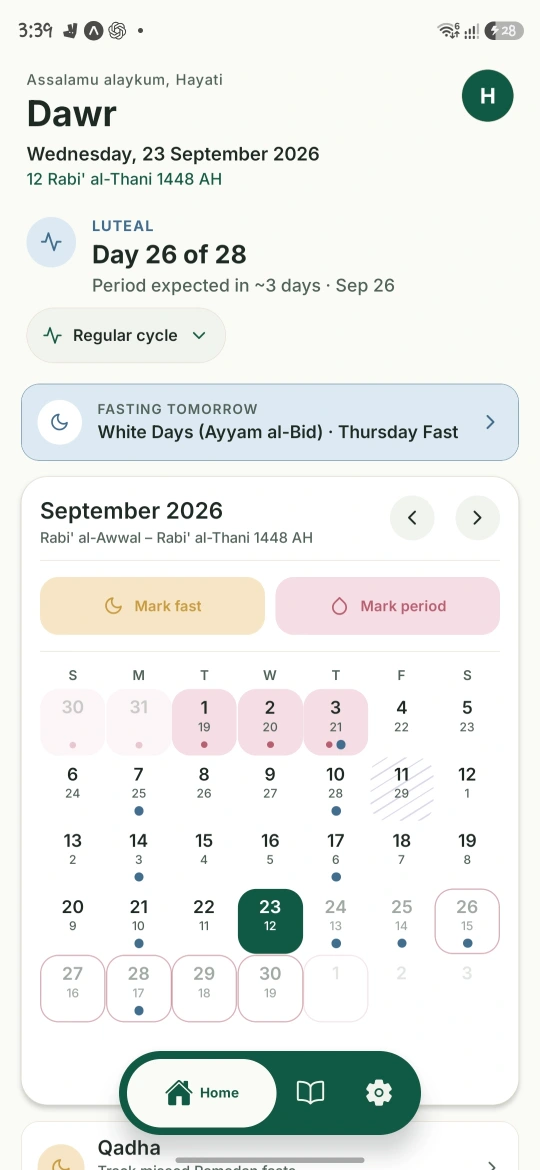
For Muslim women, a period log, a fasting record, qadha and a Hijri date can shape the same planning decision. DAWR keeps that shared context visible, without asking you to piece it together across an ordinary period tracker and scattered notes.
Menstruation can shape fasting and worship plans, so the calendar needs to hold more than cycle dates alone.
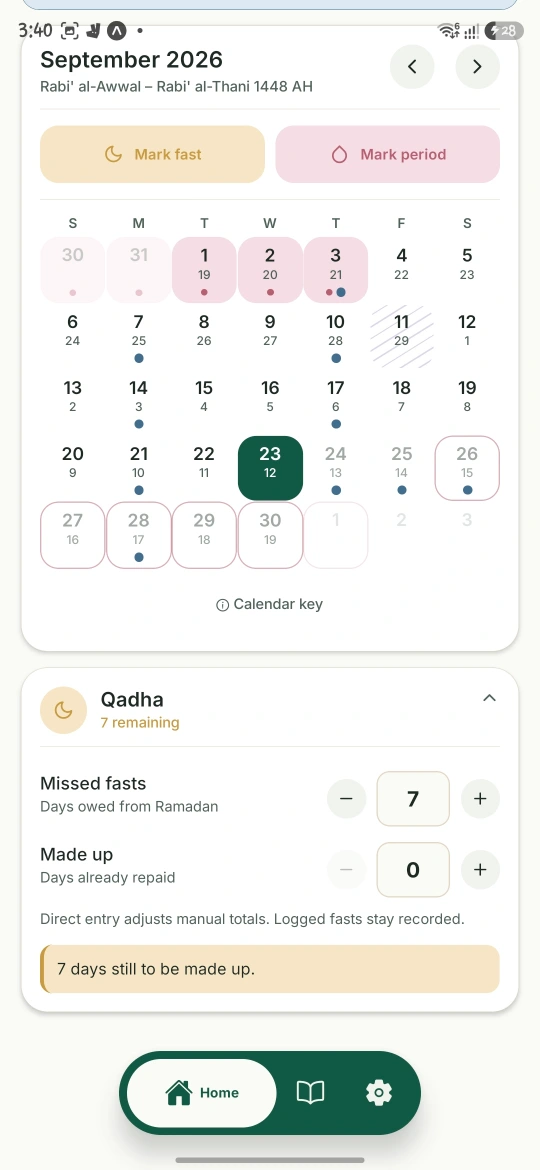
Missed Ramadan fasts and completed make-up fasts need a record that stays easy to return to.
Fasting days follow the Hijri calendar. DAWR keeps Hijri and Gregorian dates in the same view.
“I track my period in one app and my fasting in Google Keep. It gets messy. DAWR brings it together.”Anonymous DAWR user
Plan with one calendar
Record what happened, understand what may be ahead and plan with cycle, worship, Gregorian and Hijri context in view.
Fasting and qadha
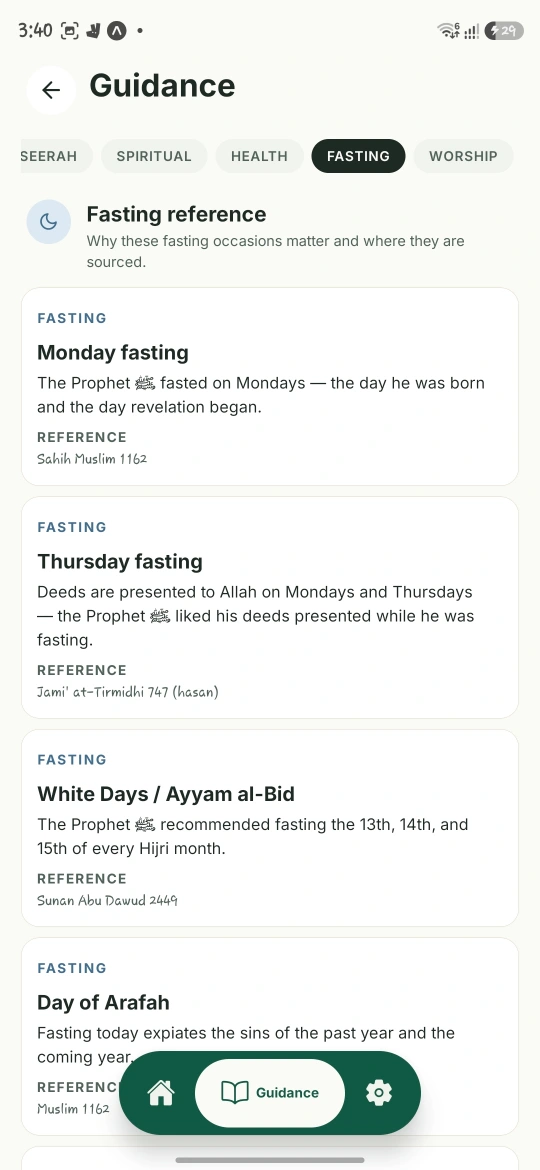
Period and fasting records belong in the same picture. DAWR helps you remember what is owed and record what has been made up, without losing the day-by-day context.
“Our Ramadan calendar stayed on the fridge for months because my missed fasts were still written on it.”Anonymous DAWR user
Life stages
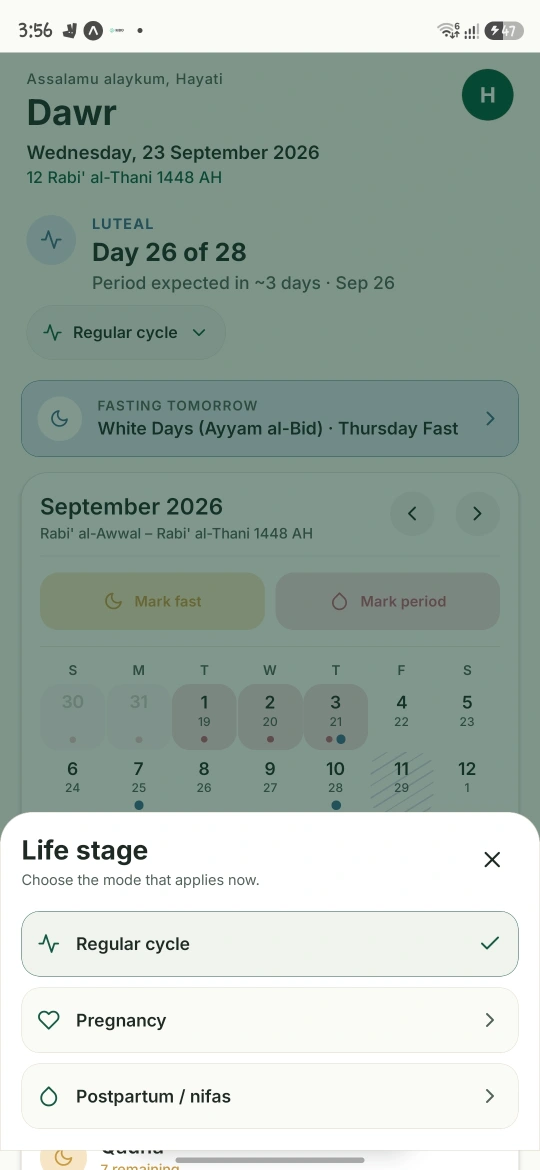
Choose the life stage that fits now. DAWR adapts its cycle prediction behavior calmly, while leaving you in control of what you record.
Log periods and build a clearer cycle history.
Pause ordinary cycle predictions when you choose.
Keep postpartum records distinct from regular periods.
Faith-aware guidance
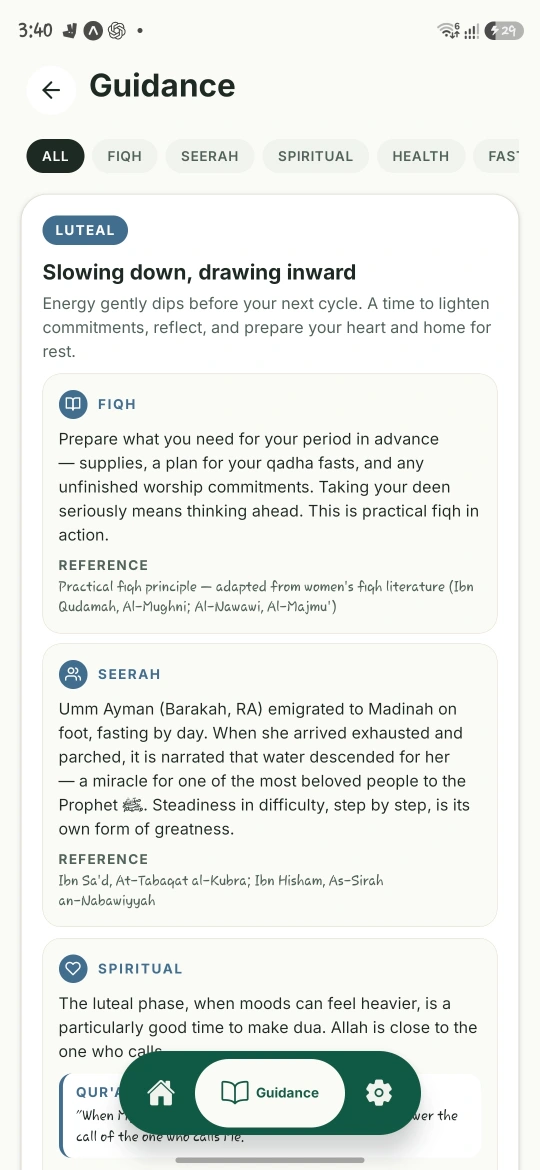
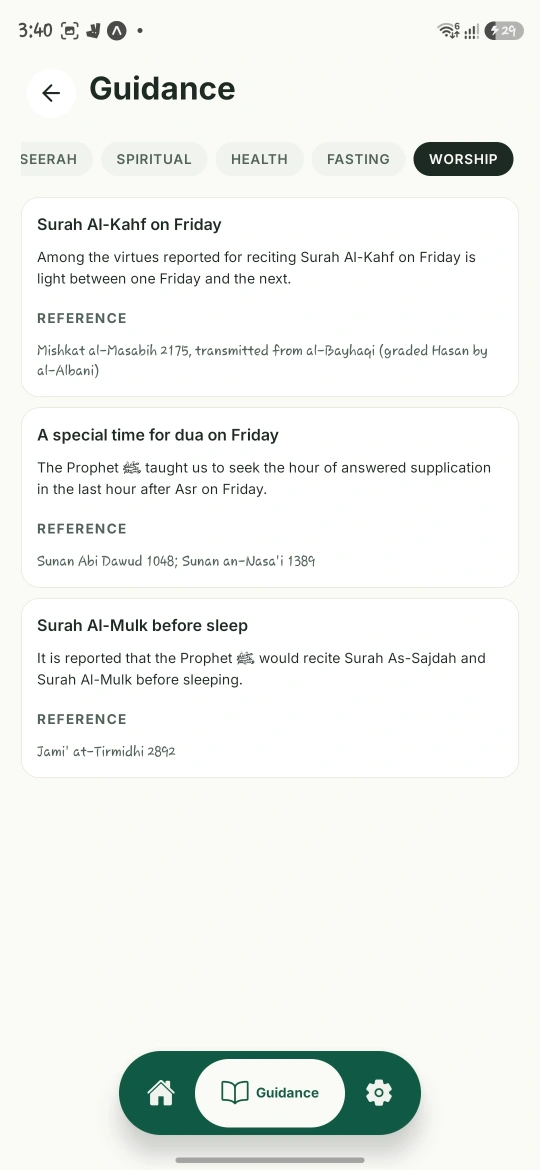
DAWR brings relevant guidance, worship reminders and visible source references closer to the records that give them context.
DAWR offers supportive guidance. It does not replace qualified medical care or personal consultation with a trusted scholar.
Privacy by design
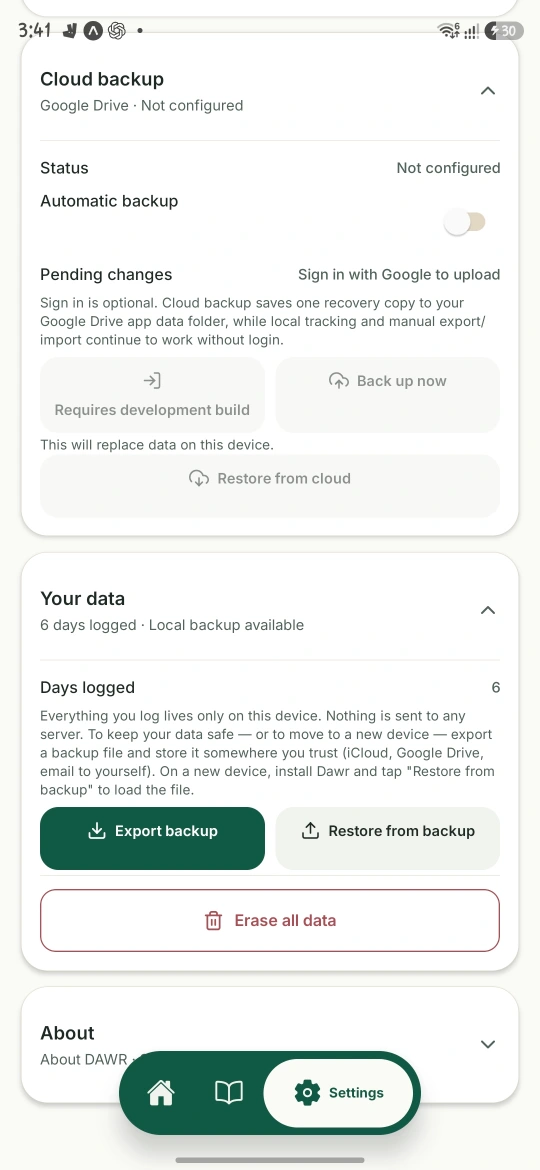
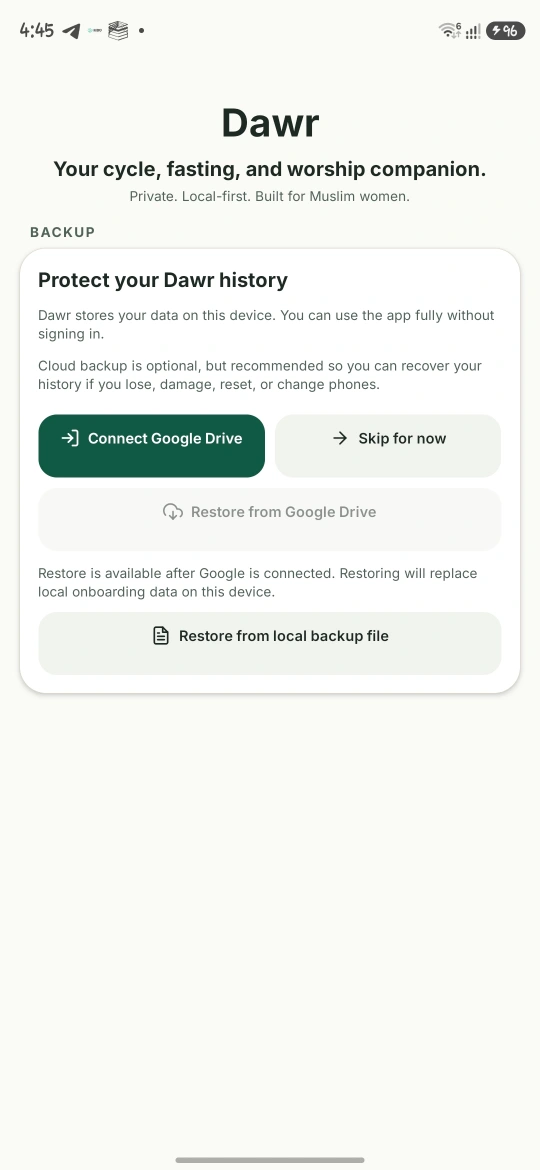
Core tracking is local-first and does not require a DAWR account. Backup is optional, so you choose when and how to protect a copy of your records.
Core tracking data starts on your device.
Use the core tracker without creating a DAWR account.
Connect Google Drive only if you choose to use it.
Manual export and restore keep another option in your hands.
From the DAWR community
Early users told us what it meant to have cycle tracking, fasting context and privacy considered together.
I already use an app to track my period, but I track my fasting in Google Keep and it is messy. I love the Islamic perspective and having it all together.
I’m downloading it right this second and deleting my other period app.
The interface is clean, and I love that you can choose cloud backup and restore from cloud.
This is such a deeply needed app, combining cycle tracking with privacy and our deen in a local-first way.
I wanted something private and more appropriate for my daughter than the period apps we had tried. I downloaded DAWR and shared it with family and friends.
Our Ramadan calendar had been on the fridge for months because I still had missed fasts written on it.
FAQ
No. Core tracking works without a DAWR account. An external provider account is only needed if you choose its optional backup service.
Core tracking data is stored locally on your device. Optional backups are created only when you choose a backup method.
Yes. You can record missed Ramadan fasts and the make-up fasts you complete.
Yes. You can select pregnancy or postpartum / nifas so cycle prediction behavior reflects that life stage.
No. DAWR is a personal tracking and educational tool. It does not diagnose, treat, issue personal religious rulings or replace qualified care and consultation.
Available now
Download DAWR for yourself, or share it with a Muslim woman who would value private, faith-aware tracking.